New Patients
(301) 259-3750
Existing Patients
(301) 333-9000


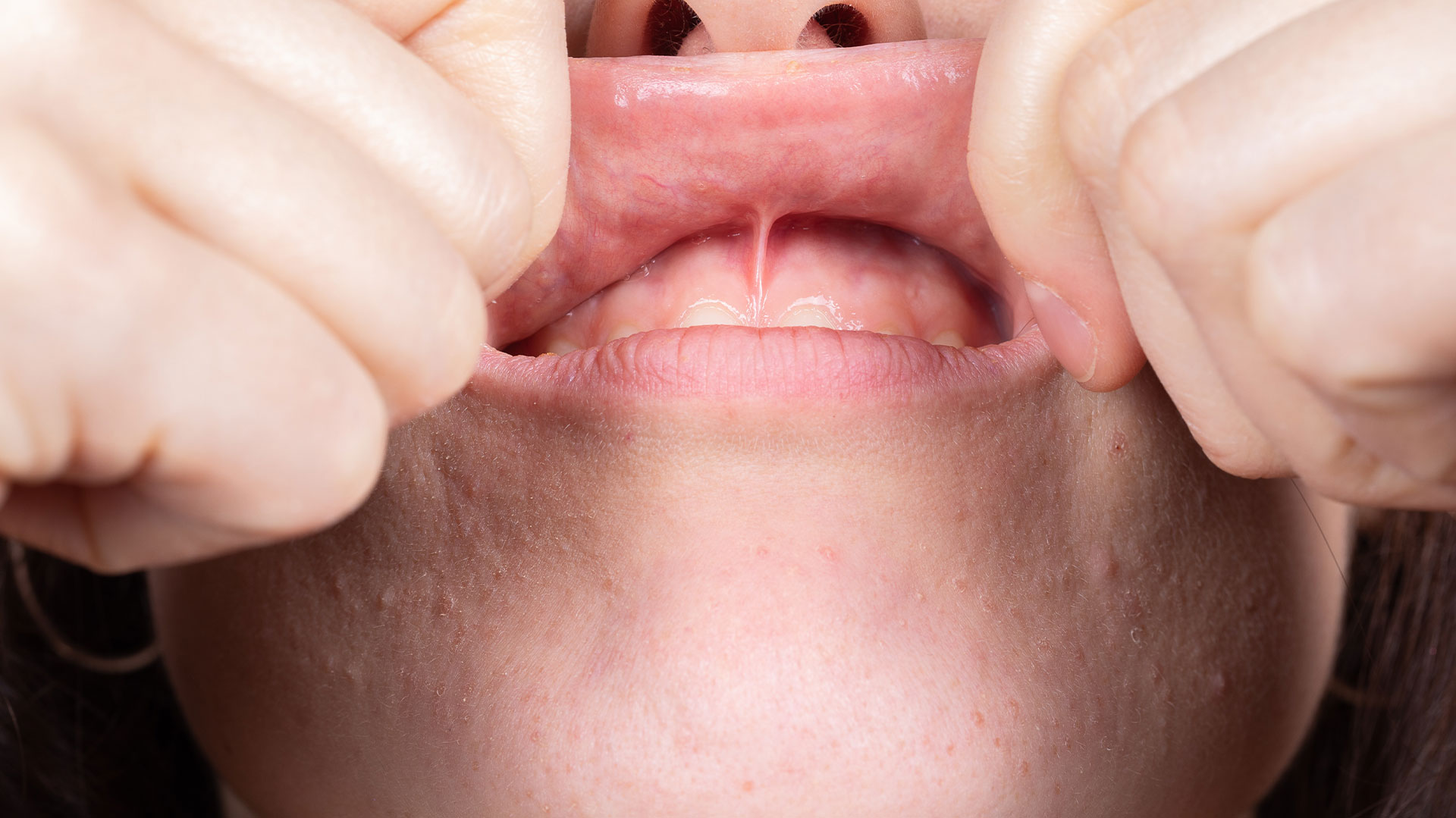
A frenectomy is a minor surgical procedure to modify or remove a frenum — the small band of tissue that connects the tongue or lip to the mouth floor or gums. While frena are normal anatomical structures, an unusually short or tight frenum can limit movement and affect functions such as breastfeeding, speech, oral hygiene, and tooth alignment. Recognizing when a frenum is causing a problem is the first step toward improving comfort and long-term oral development.
In infants, a restrictive frenum may present as difficulty latching or inefficient milk transfer. In older children, the impact can show up as restricted tongue mobility, speech articulation challenges, or orthodontic concerns. Not every short frenum requires treatment; many children adapt without intervention. Our approach is to carefully assess function first and recommend a frenectomy only when it clearly benefits a child’s oral health or developmental progress.
Because the risks and potential benefits vary with age and symptoms, a thorough, individualized evaluation is essential. We explain the reasons for recommending treatment in plain language, and we involve parents in decision-making so they understand how a frenectomy may support feeding, speech, or dental health over time. The goal is targeted care that helps a child meet developmental milestones with minimal disruption.
Assessment begins with a functional exam: we observe how the child uses the tongue and lips during feeding, swallowing, speech tasks, and routine oral hygiene. For infants, we often ask parents about feeding patterns, nipple pain, and whether weight gain is following expected trends. For older children, we look for compensation patterns such as restricted tongue elevation, gaps between teeth, or trouble with specific speech sounds that suggest limited mobility.
We also consider input from other professionals when appropriate. Pediatricians, lactation consultants, and speech-language pathologists often provide valuable observations that help clarify whether a frenum is the primary issue or part of a broader pattern. Coordinated care ensures that any recommended procedure is aligned with the child’s overall developmental plan and supported by post-procedure therapy when needed.
Diagnostic tools are straightforward and noninvasive. A hands-on oral exam, functional movement tests, and photographic documentation are usually sufficient. If orthodontic issues are suspected, we may refer for an orthodontic evaluation to determine whether a frenectomy should be timed to complement other treatments. Each recommendation reflects a balance between immediate functional needs and long-term oral health.
Your initial consultation focuses on listening and observing. We take a detailed history, ask about feeding or speech concerns, and perform a careful oral exam with gentle hands-on assessment. For infants, we often review nursing sessions or bottle feeding mechanics; for older children, we might request a brief speech sample or a demonstration of tongue movements. Our aim is to identify clear functional limitations rather than rely solely on how the tissue looks.
When appropriate, we explain the likely outcomes of both treatment and non-treatment so families can make an informed choice. If a frenectomy is recommended, we discuss the procedure in age-appropriate terms, outline comfort measures, and describe expected healing and follow-up. We also review any coordination needed with other specialists, such as lactation consultants or speech therapists, to support the child’s recovery and functional gains.
Safety and comfort are central to our evaluation. We tailor the plan to each child’s age and temperament, considering options like topical numbness for infants or local anesthesia for older children, and we always discuss pain management and aftercare. Parents leave the consultation with a clear understanding of the rationale behind the recommendation and the steps involved in moving forward.
Frenectomies are typically quick procedures performed in the dental office under controlled, child-friendly conditions. Techniques vary — some providers use traditional instruments while others use a soft-tissue laser. Both approaches aim to release restrictive tissue safely; lasers can reduce bleeding and may improve intraoperative visibility, but the choice of technique depends on the child’s needs and the clinician’s assessment of the best option.
Comfort is prioritized throughout. For infants, many frenectomies can be completed with minimal anesthesia, using topical agents and swift, efficient technique to limit stress. Older children usually receive a local anesthetic to ensure a painless experience, and we employ calming strategies tailored to the child, such as distraction, child-centered explanations, and a gentle team presence. We never proceed without making sure parents understand and consent to the plan.
The procedure time itself is brief — often minutes — but we build in time before and after to prepare the child and family, answer questions, and provide clear post-operative instructions. Immediate results are often noticeable, such as improved tongue reach or lip mobility; functional improvements like easier breastfeeding or clearer speech may follow as the child adapts and, when needed, participates in guided exercises or therapy.
We also emphasize preventive considerations during the visit. Proper technique and timing can reduce the risk of scar formation and reattachment. When indicated, we teach families simple stretching exercises to support healing and prevent recurrence, and we schedule follow-up visits to monitor progress and reinforce care instructions.
Healing after a frenectomy is usually rapid, especially in infants, but every child’s recovery looks a little different. Common short-term effects include mild soreness, slight swelling, and sensitivity while eating or nursing; these typically resolve within a few days to a couple of weeks. We provide evidence-based guidance for comfort measures and when to contact the office if parents notice signs that need evaluation.
Post-procedure stretches or movement exercises are often recommended to maintain mobility and reduce the chance of reattachment. For infants, follow-up with a lactation consultant can optimize breastfeeding mechanics and ensure the gains from the procedure translate into effective feeding. For older children, collaboration with a speech-language pathologist can support articulation goals and reinforce functional improvements in speech and swallowing.
Long-term benefits of a successful frenectomy include improved range of motion, easier oral hygiene, reduced orthodontic strain in certain cases, and support for clearer speech development when combined with appropriate therapy. Our focus is on long-term function rather than cosmetic change: we aim to remove the functional barrier so the child can meet developmental milestones with greater ease.
We schedule timely follow-up appointments to track healing and functional progress. If additional interventions are needed later — for example, orthodontic referral or speech therapy — we coordinate care and keep parents informed so each child receives the right support at the right time.
At Omni Smiles Pediatric Dentistry, our team brings experience, gentle technique, and child-centered care to every frenectomy evaluation and procedure. If you’re noticing feeding, speech, or mobility concerns in your child and want to learn whether a frenectomy might help, please contact us for more information and to arrange a consultation. We’d be glad to discuss options and next steps tailored to your child’s needs.
A frenectomy is a minor surgical procedure that modifies or releases a frenum, the small band of tissue that connects the tongue or lip to the mouth floor or gums. It is performed when a frenum is unusually short or tight and is limiting motion or function rather than for cosmetic reasons. The primary goal is to remove a functional barrier so a child can feed, speak, and maintain oral hygiene more easily.
Not every short frenum requires treatment; many children adapt without intervention and continue to develop normally. Decisions are based on functional findings—how the child uses the tongue and lips—rather than appearance alone. When intervention is recommended, the intent is to support long‑term oral development with the least invasive plan appropriate for the child.
Signs that a frenum may be restrictive vary by age and may include difficulty latching or poor weight gain in infants, restricted tongue movement and articulation challenges in toddlers, and gaps between front teeth or orthodontic strain in older children. Parents often notice compensations such as difficulty lifting the tongue, clicking sounds while eating, or persistent nipple pain during breastfeeding. A functional exam that observes feeding, swallowing, and speech tasks is the best way to determine whether the frenum is the primary issue.
We also consider the child’s overall pattern of development and seek input from related professionals when indicated. Pediatricians, lactation consultants, and speech‑language pathologists can provide complementary observations that clarify whether a frenectomy will address the core problem. Coordinated evaluation helps ensure that any procedure is timed and targeted to provide meaningful functional benefit.
Evaluating infants focuses on feeding function: we observe latch mechanics, milk transfer, and whether the baby can extend the tongue over the lower gum or flange a nipple effectively. We ask about maternal nipple pain, feeding duration, and the infant’s weight gain pattern to understand the practical impact of restricted movement. A brief hands‑on exam and gentle functional tests usually provide the information needed to decide if treatment is warranted.
When findings are unclear, we often collaborate with lactation consultants or pediatricians to gather additional feeding observations. This collaborative approach helps ensure a conservative, evidence‑informed decision that balances immediate feeding needs with long‑term oral development. Follow‑up observations after any conservative measures or therapy also inform whether a surgical release would be beneficial.
Frenectomies can be performed with traditional instruments such as scissors or scalpels, or with soft‑tissue lasers that precisely release the restrictive tissue. Both techniques aim to achieve a safe release of the frenum; lasers can reduce intraoperative bleeding and improve visibility, while conventional methods are well established and effective in experienced hands. The choice of technique depends on the child’s age, anatomy, clinical needs, and the clinician’s judgment about which method will provide the best functional outcome.
Regardless of the tool used, the procedure is brief and performed in an office setting under controlled, child‑friendly conditions. We plan for comfort and safety, tailoring anesthesia and calming strategies to the child’s age and temperament. Aftercare and follow‑up are the same priorities after either technique to support healing and maintain mobility.
Neither approach is universally superior; both laser and traditional techniques can be effective when chosen for the right patient and performed by an experienced clinician. Lasers often offer advantages such as reduced bleeding, cleaner operative fields, and sometimes faster intraoperative efficiency, which can be helpful in anxious or very young patients. Traditional instruments remain reliable and appropriate in many situations and are supported by a long track record of successful outcomes.
We evaluate each child individually and discuss the reasons for recommending a particular technique so families understand the expected benefits and tradeoffs. The most important factors are the clinician’s experience with the chosen method and the plan for postoperative care and therapy. Careful technique and consistent follow‑up reduce the risk of reattachment and optimize functional improvement regardless of the tool used.
Your initial visit focuses on listening, observation, and a gentle functional exam to understand feeding, speech, or mobility concerns. If a frenectomy is recommended, we explain the procedure in age‑appropriate terms, outline comfort measures, and obtain informed parental consent before proceeding. Appointments are scheduled to allow time for preparation, the procedure itself, and clear post‑operative instructions so families feel supported throughout the visit.
At Omni Smiles Pediatric Dentistry we prioritize a calm, child‑centered environment and tailor pain control to the child’s needs, using topical agents for infants or local anesthesia for older children as appropriate. We also discuss follow‑up care, stretching exercises when indicated, and coordination with specialists such as lactation consultants or speech therapists. Parents leave with a clear plan for monitoring healing and a point of contact if questions or concerns arise.
Discomfort after a frenectomy is usually mild and short‑lived, particularly in infants who tend to heal quickly. Common immediate effects include slight soreness, minor swelling, and sensitivity during feeding or eating for a few days to a couple of weeks. We prioritize comfort by using appropriate anesthesia during the procedure and offering clear, evidence‑based guidance for post‑operative care.
Simple measures such as short, frequent feedings, gentle oral care, and recommended soothing strategies typically manage symptoms effectively. We provide instructions for any indicated stretching exercises and advise parents on signs that warrant an office follow‑up. If additional pain control is necessary, we will recommend safe options and explain their use based on the child’s age and medical history.
Recovery is generally quick, and most children resume normal activities within a few days while continued oral movements help healing progress over weeks. We commonly recommend gentle stretching or range‑of‑motion exercises to prevent reattachment and to reinforce the new mobility, and we demonstrate these techniques for parents to use at home. A scheduled follow‑up visit allows us to assess healing, answer questions, and coordinate any additional care if needed.
For infants, follow‑up with a lactation consultant can help translate improved mobility into more effective feeding. For older children, a speech‑language pathologist or orthodontist may be involved when functional therapy or future orthodontic treatment is appropriate. Our approach emphasizes monitoring functional gains over time and stepping in with supportive therapies when they will enhance the long‑term result.
A frenectomy can be a meaningful part of the solution when a restrictive frenum is clearly impairing latch or milk transfer, and many families see improved feeding after a well‑timed release. However, feeding issues are often multifactorial, and success is greatest when the procedure is combined with post‑operative support from lactation consultants and attentive follow‑up. We assess each infant carefully to determine whether a release is likely to produce a functional improvement in breastfeeding.
When a frenectomy is recommended for feeding concerns, we coordinate care so parents receive practical feeding guidance before and after the procedure. Observable improvements in latch mechanics and decreased maternal nipple pain are common outcomes when the frenum is the primary limiting factor. Continued monitoring ensures that gains are maintained and that any additional feeding strategies are implemented promptly.
A frenectomy can improve the range of motion needed for certain speech sounds and reduce mechanical forces that contribute to dental spacing in some cases, but outcomes depend on timing, the specific anatomy, and coordinated therapy. For speech concerns, collaboration with a speech‑language pathologist before and after the procedure helps translate increased mobility into clearer articulation. For orthodontic concerns, an orthodontic evaluation can determine whether a frenectomy should be timed to complement broader treatment goals.
Our recommendations focus on long‑term function rather than cosmetic expectations: we aim to remove a barrier so the child can develop normal oral skills and reduce the need for secondary strain on teeth. Follow‑up care and referrals are arranged when necessary to support speech development, dental alignment, and overall oral health. Regular monitoring helps identify whether additional interventions are needed as the child grows.