New Patients
(301) 259-3750
Existing Patients
(301) 333-9000


Dental sealants are a straightforward, preventative treatment that can make a big difference in a child’s oral health. Designed to shield the hard-to-clean grooves of permanent back teeth, sealants are a proactive step families can take to reduce the chances of cavities while children’s brushing skills and diets continue to develop. Below, we explain how sealants work, who benefits most, what to expect during an appointment, and how to care for them so they keep working as intended.
Back teeth — premolars and molars — have deep pits and fissures on their chewing surfaces. These grooves trap food and bacteria, creating an ideal environment for decay to start. For many children, thorough brushing in these areas is difficult until their motor skills mature, so sealants act as an added line of defense that keeps harmful particles out of those vulnerable crevices.
Clinical guidance and research from professional dental organizations support the effectiveness of sealants. Applied early, they can dramatically lower the likelihood of cavities forming on molars, helping preserve enamel and avoid the need for more invasive care later on. Because they target the most decay-prone surfaces, sealants are a highly efficient preventive measure in a child-focused dental program.
Sealants also fit naturally into a broader preventive approach that includes regular cleanings, fluoride treatments, and good home care. They do not replace brushing and fluoride, but they complement those habits by protecting places that are hardest to reach with a toothbrush.
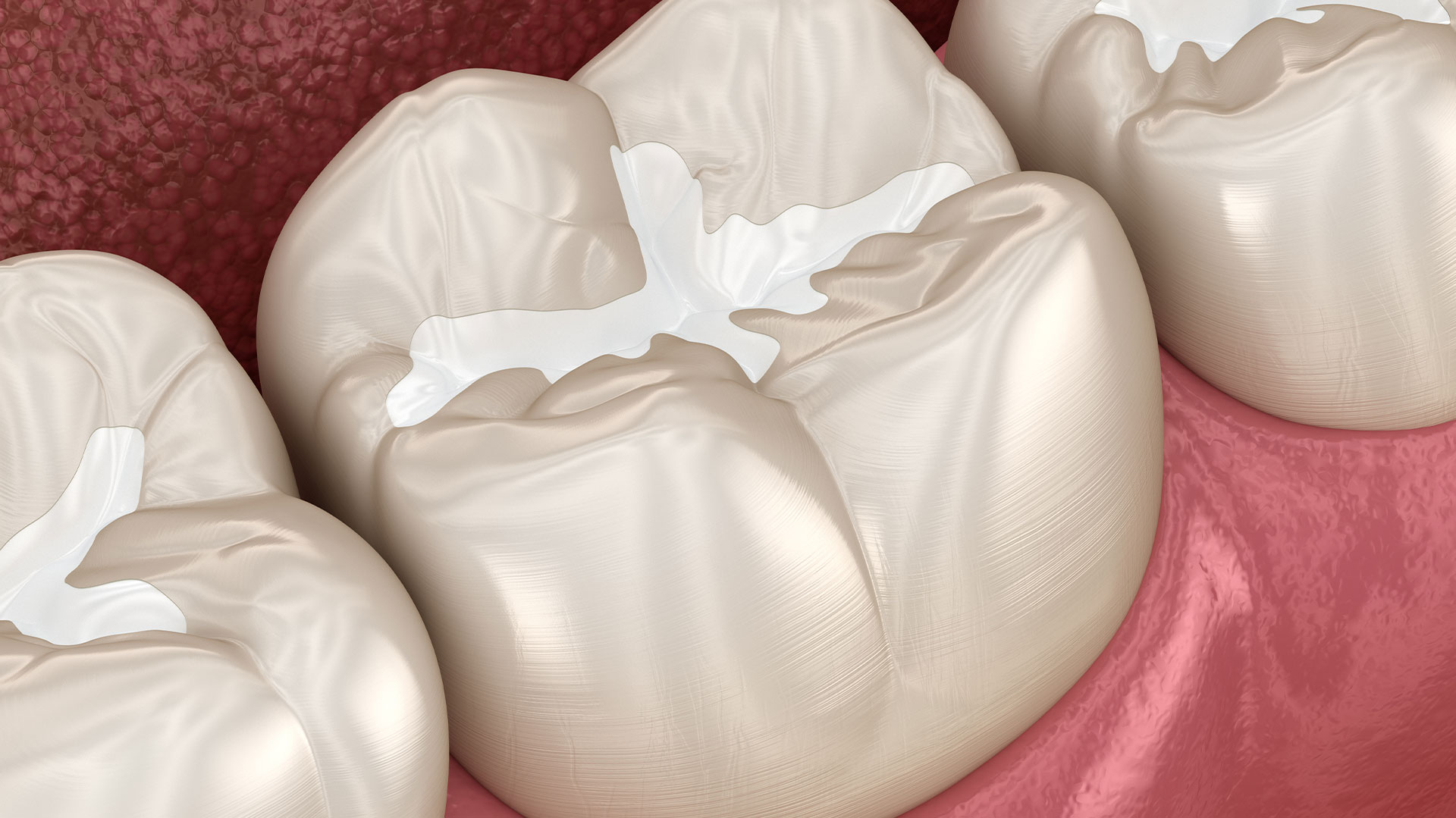
Sealants are made from a durable resin that bonds to the chewing surface of the tooth. Once in place, they form a smooth layer that fills in pits and fissures — effectively closing off the nooks where plaque and food debris tend to accumulate. The result is a surface that’s easier to clean and less hospitable to cavity-causing bacteria.
The application process helps the sealant adhere securely: the tooth is cleaned and gently prepared so the resin can bond, then the material is painted onto the surface and cured with a special light. The final effect is a thin, strong coating that does not change the tooth’s shape in a way a child notices during eating or speaking.
Beyond prevention, sealants are sometimes used as a conservative way to halt very early decay. If a small area of demineralization is present in a groove, sealing over it can isolate the area from bacteria and stop progression, avoiding more invasive restorative treatment.
Sealants are most commonly placed on permanent molars soon after they erupt because these teeth are particularly susceptible to decay in childhood. The first permanent molars usually come in around age 6, with second molars following around ages 11–13. Placing sealants soon after eruption gives the best chance to protect those teeth through the cavity-prone years.
Children and adolescents with a history of cavities or those who have difficulty maintaining thorough brushing may be especially good candidates. Dental teams also evaluate each child individually; factors such as tooth anatomy, diet, fluoride exposure, and oral hygiene are considered when recommending sealants.
In some circumstances, sealants may be appropriate for older teens or even adults on molars that still show deep grooves and no existing restorations. Primary (baby) teeth can be sealed in select cases when anatomy or high cavity risk suggests it would be beneficial until the permanent teeth erupt.
A sealant visit is typically quick, noninvasive, and comfortable. After a routine cleaning and exam, the clinician isolates the tooth to keep it dry, then gently cleans the chewing surface. A safe, mild conditioning step helps the resin bond to the enamel — this is not painful and usually does not require any anesthetic.
Next, the sealant material is carefully applied and spread into the grooves. A curing light is used for a short time to set the material hard. The clinician will then check the sealant to ensure it’s smooth and that your child’s bite feels normal. Because the process is fast, many sealants can be placed during the same visit as a dental checkup.
Parents often appreciate that sealant placement involves minimal time in the chair and no drilling for healthy teeth. After the visit, children can return to normal activities and eating, while benefiting from an added protective barrier over the most vulnerable tooth surfaces.
Sealants are durable but not permanent; they can last for several years when properly cared for. During routine dental checkups, the condition of each sealant is evaluated and any worn or damaged areas are repaired or replaced as needed. This ongoing monitoring helps ensure the protective effect continues through childhood and adolescence.
Good home care remains essential even with sealants in place. Regular brushing with fluoride toothpaste, daily flossing between adjacent teeth, and a balanced diet reduce overall cavity risk. Because sealants protect only the sealed surfaces, maintaining these daily habits protects all other tooth surfaces and supports long-term oral health.
When combined with professional cleanings and fluoride therapy, sealants are part of a preventive toolkit that helps children keep their natural teeth healthy for life. Families in Laurel, MD, and the surrounding community often choose sealants as a sensible, evidence-based measure to reduce the need for restorative treatment in growing smiles.
Dental sealants are a practical, low-impact way to strengthen a child’s defense against cavities, especially on the chewing surfaces of newly erupted molars. If you’d like to learn whether sealants are a good fit for your child, please contact Omni Smiles Pediatric Dentistry for more information.
Dental sealants are a thin, protective coating applied to the chewing surfaces of teeth to protect deep grooves and pits from food and bacteria. The material bonds to enamel and creates a smooth surface that is easier to clean with a toothbrush. Sealants are a preventive measure designed to reduce the risk of cavities, especially on molars and premolars where decay commonly starts.
The application is noninvasive and typically requires only cleaning and mild conditioning of the tooth before the resin is placed and cured with a light. Once set, the sealant acts as a barrier that limits plaque accumulation in vulnerable crevices. Because they target specific surfaces, sealants complement other preventive care like fluoride and daily oral hygiene.
Children's molars and premolars have complex pits and fissures that trap food particles and bacteria, making them harder to clean than smooth tooth surfaces. Young children often lack the fine motor skills needed for consistent, thorough brushing in these areas, which increases cavity risk during the years when permanent molars erupt. Sealants provide an added layer of protection while a child develops better brushing habits and a stable oral environment.
Because molars do most of the chewing, they are exposed to frequent contact with food and sugars, which can accelerate decay if grooves are unprotected. Placing sealants soon after a tooth erupts reduces the window of vulnerability when cavities are most likely to form. In a pediatric preventive program, sealants are an efficient way to focus protection where it is most needed.
Sealants are most commonly placed on permanent first molars shortly after they erupt, which is usually around age 6, and on second molars as they come in around ages 11 to 13. Timing aims to protect teeth during the years when children are most susceptible to cavities as brushing technique and diet habits are still developing. Dentists evaluate eruption status and tooth anatomy to determine the optimal moment for placement.
Children with a history of cavities or those who struggle with thorough daily hygiene may receive sealants earlier or on additional teeth, including some primary teeth in special circumstances. Regular dental checkups allow the dental team to monitor eruption patterns and recommend sealants when they will offer the most benefit. Families in Laurel, MD and nearby communities often choose sealants soon after molars appear to maximize long-term protection.
Sealants are typically made from a durable dental resin that has been used safely in preventive dentistry for many years. The material is applied in liquid or semi-liquid form and then hardened with a curing light, creating a stable coating that bonds to enamel. Dental teams follow standard infection-control and material-handling protocols to ensure patient safety during placement.
Concerns about components in dental materials are common, and clinicians are prepared to discuss ingredients and alternatives if parents have questions. The small amount of material used on each tooth minimizes exposure, and many practices offer sealant formulations that address specific family concerns. If there are any material sensitivities, the dentist can review options during the evaluation.
No. Sealants are an important preventive tool but they do not replace daily oral hygiene, fluoride treatments, or routine dental exams. Brushing, flossing, and professional fluoride help protect all tooth surfaces and address risks that sealants do not cover. Sealants specifically protect the sealed chewing surfaces but other areas remain susceptible without comprehensive care.
Regular dental visits are essential to evaluate the condition of sealants, perform cleanings, and monitor overall oral health. During exams, clinicians can repair or reapply sealants if they become worn or damaged and reinforce home-care guidance. Combining sealants with fluoride therapy and consistent brushing creates a layered approach that reduces cavity risk across the whole mouth.
Sealants are durable but not permanent; they commonly last several years and can remain protective throughout childhood and adolescence with proper care. During routine dental checkups the clinician inspects each sealant for wear, chipping, or gaps and repairs or replaces material as needed to maintain an effective barrier. Prompt attention to a damaged sealant helps preserve protection and prevents decay from starting beneath a compromised area.
Good home care supports sealant longevity—regular brushing with fluoride toothpaste, daily flossing, and a tooth-friendly diet reduce the stresses that can wear sealants over time. Avoiding habits that place unusual force on individual teeth, like chewing ice or very hard objects, also helps preserve the sealant material. Ongoing monitoring at dental visits ensures the protective benefit continues while teeth develop.
Yes. In many cases sealants can be applied during the same appointment as a routine cleaning and exam, making care efficient for families. After a professional cleaning and a brief clinical assessment, the tooth is isolated, cleaned, conditioned, and the sealant is placed and cured, so the visit can often address both prevention and evaluation in one session. This convenience is one reason sealants are widely used in pediatric dentistry.
The team will confirm that the tooth is suitable for sealing—fully erupted enough to isolate and free of decay that requires restoration. If additional treatment is needed before sealing, the clinician will discuss the next steps with parents. For appropriate teeth, same-day placement reduces the number of appointments while delivering timely protection.
Sealants can be used in some cases to halt very early decay that is limited to the grooves of a tooth by isolating the area from bacteria and further exposure to sugars. When decay is detected at an initial, noncavitated stage, sealing over that spot can prevent progression and preserve tooth structure without the need for drilling. Whether this conservative approach is appropriate depends on a careful clinical assessment of the lesion.
Dentists consider factors such as lesion depth, location, and the child's overall cavity risk before choosing to seal an early lesion. If a lesion is more advanced or undermines structural integrity, restorative treatment may be necessary instead. The goal is always to select the least invasive, most effective option to protect long-term oral health.
Yes. While sealants are most commonly used in children and adolescents, adults with deep grooves on molars or premolars and no existing restorations may also benefit from sealants. An adult's cavity risk, tooth anatomy, and history of restorations are evaluated to determine whether sealing a particular surface would provide meaningful protection. In select cases sealants can reduce the chance that a vulnerable tooth will develop decay.
For adults, the decision to apply sealants is individualized and made in the context of overall preventive care, including fluoride exposure and oral hygiene habits. During a dental exam the clinician will discuss whether sealants are a suitable addition to a patient's prevention plan and explain expected benefits and maintenance recommendations. Sealants can be a conservative option when used appropriately for adult teeth.
At Omni Smiles Pediatric Dentistry, the clinical team evaluates each child’s individual cavity risk, tooth anatomy, eruption timing, diet, and oral hygiene when recommending sealants. The decision is based on a clinical exam and discussion with parents about the child’s habits and history, not a one-size-fits-all rule. This personalized approach ensures sealants are used where they provide the most protective benefit.
During the evaluation the dentist will identify teeth with deep pits or fissures, assess whether a tooth is sufficiently erupted for isolation, and consider other preventive measures that may already be in place. If sealants are recommended, the team explains the placement process, aftercare, and follow-up schedule so parents understand how the treatment fits into a broader preventive plan. The goal is shared decision-making that supports healthy, long-lasting smiles.